Sound familiar?Kemble
- The call
- The door closes, touches the floor, then climbs straight back up as if it hit something. Nothing is in the way, the sensor lights are steady, and it has been doing this since the weather turned.
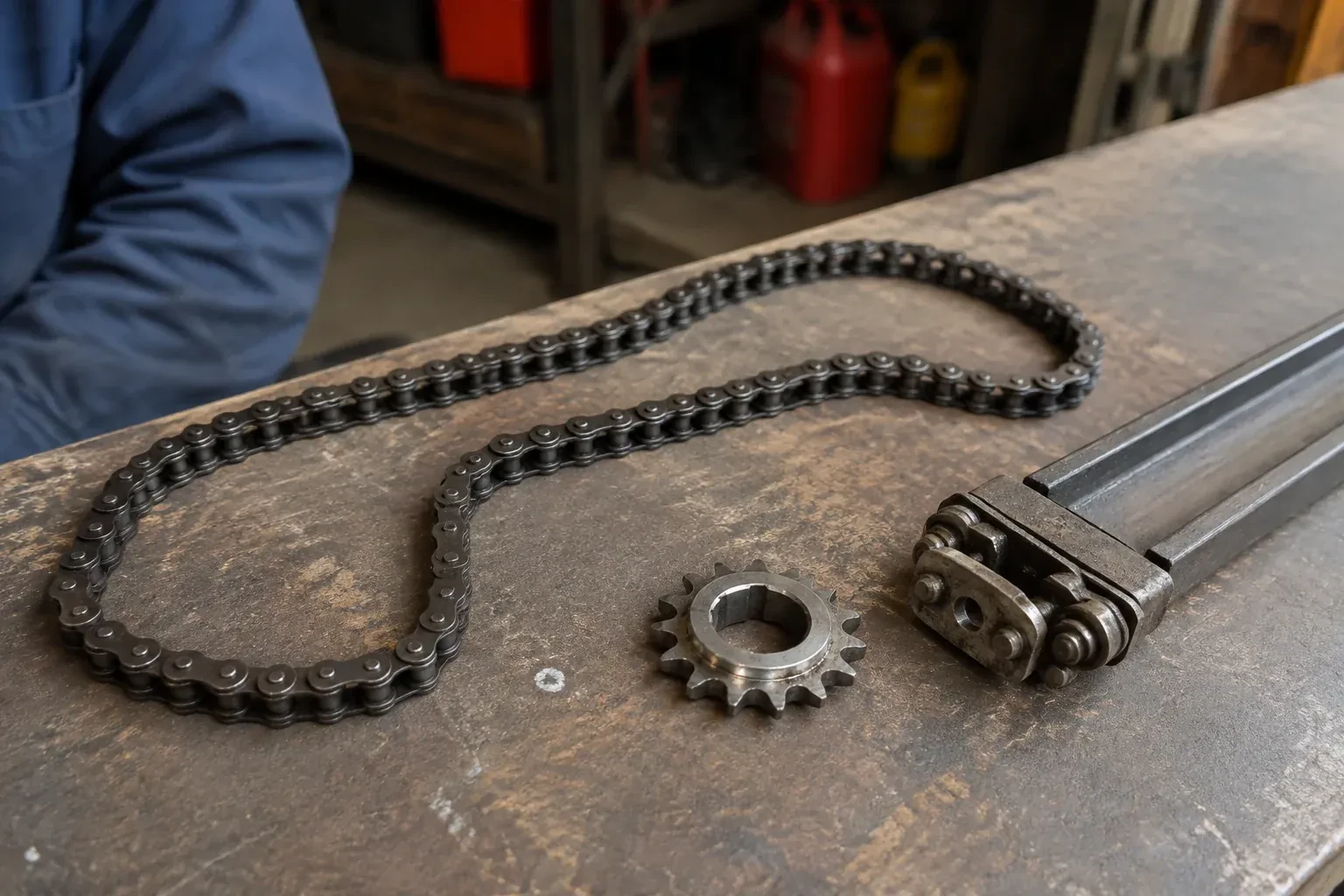
The chain in the detached garage went orange with rust over the winter, the links are stiff, and the opener strains and groans to pull the door up. By afternoon, once the garage warms, it behaves almost normally.
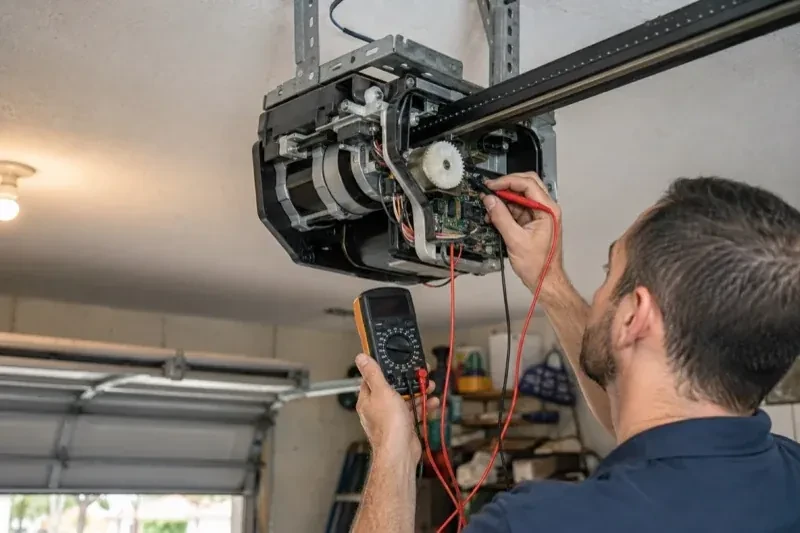
The most common chain-drive failure happens out of sight. Inside the motor head a plastic drive gear meshes with a steel worm on the motor shaft, and after years of lifting a door that has grown heavier its teeth wear away. The motor keeps running, but the sprocket above it turns weakly or not at all, and pale shavings collect under the cover. The repair fits a new gear and sprocket assembly made for that model, greases it properly, and then asks why the gear wore out. Usually the answer is a door that needs spring attention, and settling that is what protects the new gear.
Sound familiar?Kemble
Chain-Drive Opener Repair · Kemble
Scene 1
The chain runs over two wheels: the drive sprocket on top of the motor head and an idler sprocket or pulley at the far end of the rail near the door. Both are inspected. Sprocket teeth that have worn into hooks let the chain ride up and skip under load, usually at the same spot every cycle, and a sprocket that has loosened on its shaft turns a fraction behind the motor. The idler is checked for a seized bearing or a groove worn off centre, which drags the chain to one side of the rail. Matching wear on chain and sprocket usually means both are renewed together so a new chain is not run over old teeth.
Scene 2
No chain-drive repair ends without the reversal tests, because every adjustment to tension, limits or force can change how the operator senses an obstruction. A 38 mm block, or a 2x4 laid flat, is placed on the floor under the centre of the door and the door is closed from the wall control; on touching it the door must stop and return to fully open. The door is closed again while an object is passed through the photo-eye beam, and it must reverse the same way. Any hesitation sends the technician back to the force setting or the sensors, and the tests are repeated until both pass in front of you.
Scene 3
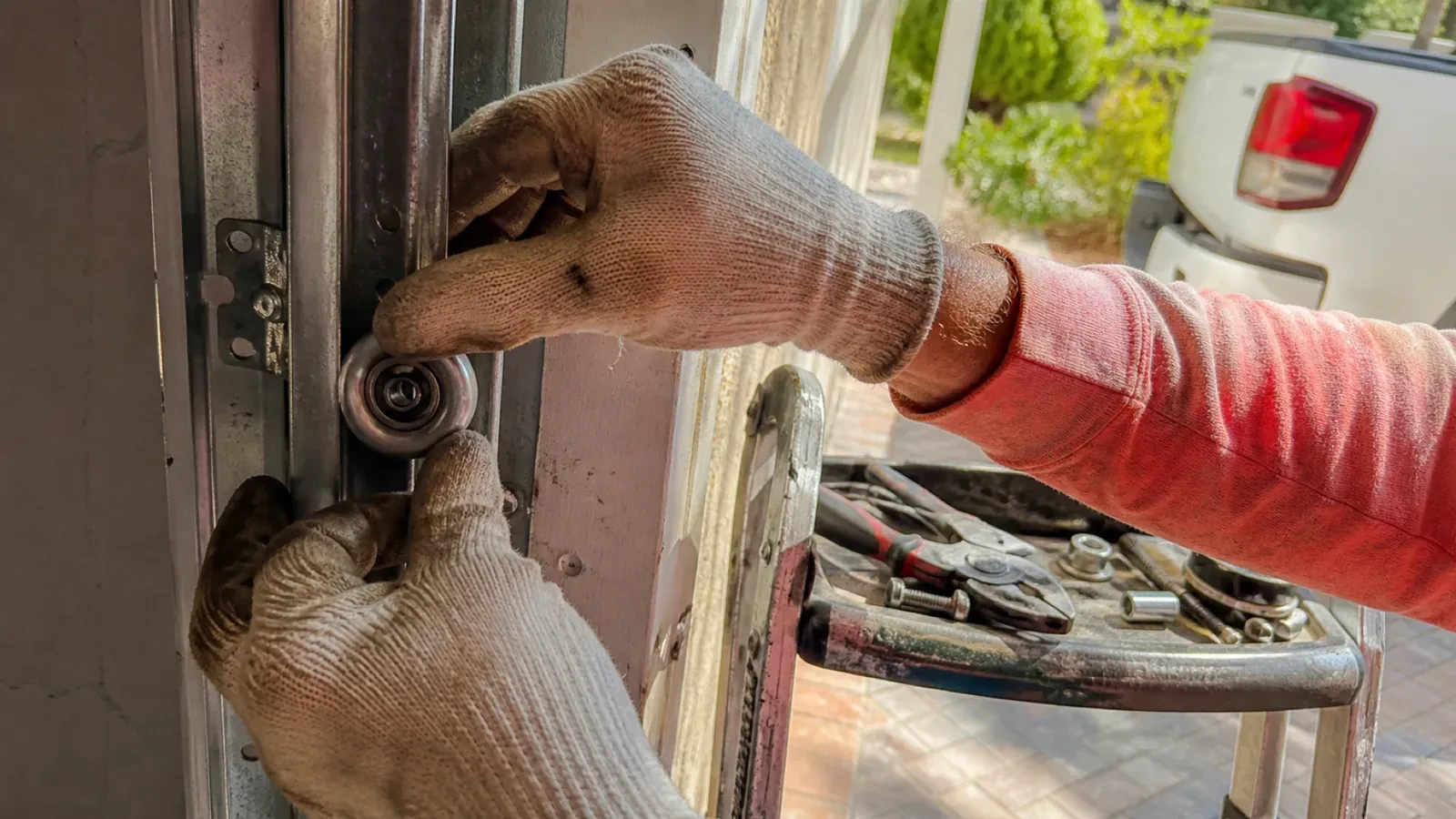
The drive gear that was replaced can wear out when it is asked to lift more than the chain should carry, though binding or wear elsewhere in the drive can share the blame. Keeping the load honest starts with the door's balance. Each season, with the door closed, pull the red release, lift the door by hand to about a metre and let go; it should stay put. If it sinks or creeps upward, the springs have drifted and a spring adjustment is due before the operator starts working harder to compensate. Reconnect by running the operator until the trolley picks up the arm. This one check does more for the gearbox than anything else you can do.
What shapes the quoteSaugeen Door Specialists
FeesSame any hour
The sprocket is the toothed wheel on top of the motor head that pulls the chain. Every cycle drags the chain over its teeth, and over years the teeth wear thin and hooked, letting the chain ride up and skip under load, often at the same point on the rail each time. A sprocket that has loosened on its shaft lags behind the motor. Worn sprockets are replaced as part of the gear and sprocket assembly.
With the door closed, pull the red handle and try lifting the door by hand; note whether it is heavy or stays up on its own. Look at the chain for slack, rust or a broken link, and at the head for pale shavings. Note whether the motor runs at all, whether the door stops short or reverses, and where the trolley sits on the rail. The model on the head's label and a photo of the rail help too.
On the interval the opener's own manual calls for, often every two to three years. With the power off, the old grease is wiped from the rail along the path the trolley travels, and a thin layer of white lithium grease is applied in its place. The door is then run a few times so the trolley spreads it. The door's own tracks, where the rollers run, are never greased; they stay clean and dry, and the rollers, hinges and bearings take a garage door lubricant once a year instead.
GreyOntario
Chain-Drive Opener Repair · Owen Sound, Chatsworth, Georgian Bluffs, Hanover, Meaford, West Grey, Kent, Brooke, Dornoch, Elmwood, Annan, Bognor, Kiowana Beach, Leith, Woodford, Big Bay, Keady
Every square is one home in a hundred.
On-site assessment
The chain in the detached garage went orange with rust over the winter, the links are stiff, and the opener strains and groans to pull the door up.
(226) 909-6720, open 24/7.
On-site assessment preferred · (226) 909-6720, open 24/7