Sound familiar?Dornoch
- The call
- The rolling door starts upward, then one side rises ahead of the other. Its bottom bar sits on an angle, several slats scrape the guide, and the opening is no longer clear enough for normal shipping traffic.
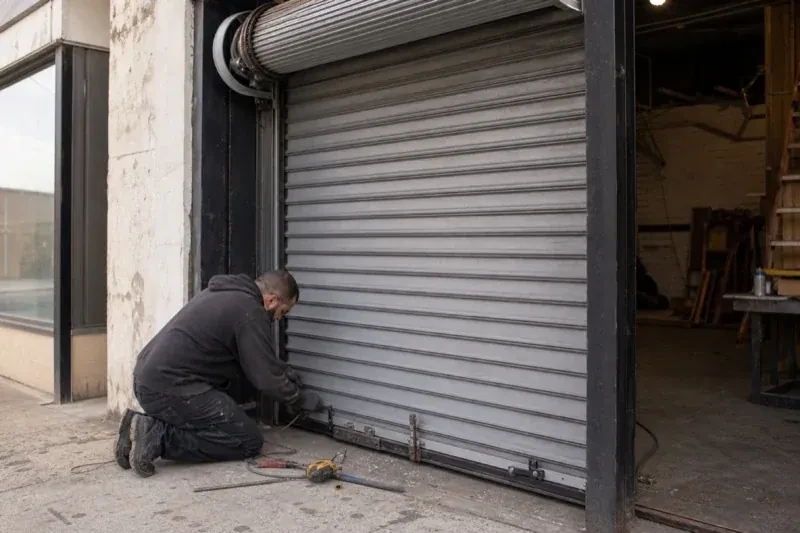
Cold-weather moisture has frozen the bottom seal to the sill, and salty grit has collected along the guide entrances. The door chatters during its first cycle and leaves a visible gap after it reaches the closed limit.
Powered rolling doors add controls and protective devices to the mechanical assembly. A closing complaint may begin at the control station, interlock, sensing edge or photoelectric sensor rather than inside the operator. The visit checks the curtain's free movement first, then follows control response, brake action, limit settings, manual disconnect or hoist and external protection suited to that system. Compatible repairs are completed with the operating instructions in hand. Testing covers normal commands, stopping points, manual operation and protective-device response so staff understand how the restored door is intended to behave.
Sound familiar?Dornoch
Commercial Rolling Door Repair · Dornoch
Scene 1
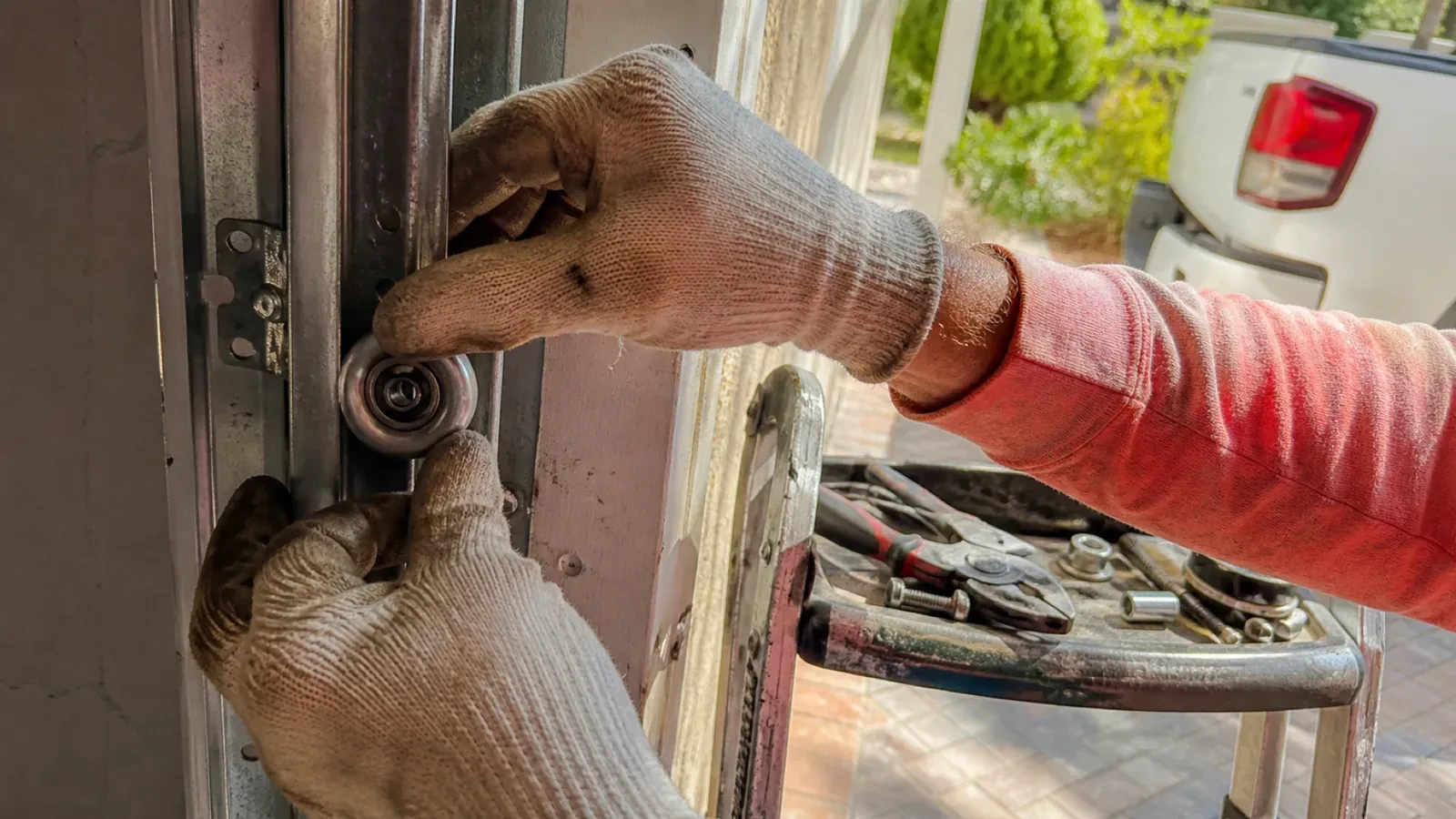
Above the opening, the barrel, headplate brackets, bearings and counterbalance carry the curtain and shape its operating effort. The technician looks for bracket movement, worn-bearing sounds, loose drive connections and signs that the curtain has walked sideways. Balance is evaluated only after the door is secured and the operating method is understood. A door that rises by itself, drops from a set position or feels heavy through part of its travel may need mechanical correction, while a consistent rough spot may trace to a bearing or distorted coil. This check keeps the operator from masking a mechanical load problem.
Scene 2
Operator work begins after the curtain moves correctly without being dragged through a bind. The technician services the authorised brake, drive, limit or control components, sets chain alignment and tension where applicable, and confirms the emergency hoist or disconnect follows its intended sequence. A worn hand-chain wheel, keeper or reduction component is corrected so manual operation remains controlled. Electrical supply or building wiring concerns are recorded for the responsible trade instead of hidden inside a mechanical adjustment. The operator is then coupled to a balanced door and its open and closed stopping points are established from the actual travel.
Scene 3
A repaired impact area offers useful evidence for prevention. The technician can show where the vehicle contacted the guide, bottom bar or curtain and which travel lane placed it there. Facility managers can respond with visible floor markings, adjusted staging, guide guards or a revised stopping point where those choices suit the site. Operators should report even a light strike because a guide can move before damage looks dramatic. Checking bottom-bar level, guide clearance and fasteners after contact turns a small event into a manageable inspection instead of allowing repeated cycles to spread distortion through the curtain.
What shapes the quoteSaugeen Door Specialists
FeesSame any hour
Staff can observe bottom-bar level, new dents or rub marks, guide debris, loose visible fasteners, torn seals, sensor cleanliness, unusual sounds and changes in operating effort. They can keep the sill and doorway clear and record impacts. Spring tension, bracket release and internal repairs remain controlled technician tasks because those areas involve curtain weight and stored energy.
The lower guides, sill, fasteners, bottom seal and sensor faces are checked for ice, grit and corrosion. Buildup is cleared with methods suited to the material, drainage issues are noted and damaged sealing parts can be renewed within scope. The door is tested after cleaning because cold-weather resistance can exist alongside an alignment or balance problem.
Commercial operators commonly include a manual hoist, hand chain or disconnect arrangement, but the sequence varies by system. Staff are shown the intended changeover and normal manual effort after repair. The door must still move freely and remain balanced; the emergency method is an operating feature, not a substitute for correcting a binding curtain or worn component.
GreyOntario
Commercial Rolling Door Repair · Owen Sound, Chatsworth, Georgian Bluffs, Hanover, Meaford, West Grey, Kent, Brooke, Elmwood, Annan, Bognor, Kiowana Beach, Leith, Woodford, Big Bay, Keady, Kemble
Every square is one home in a hundred.
On-site assessment
Cold-weather moisture has frozen the bottom seal to the sill, and salty grit has collected along the guide entrances.
(226) 909-6720, open 24/7.
On-site assessment preferred · (226) 909-6720, open 24/7